
Why Running Analysis Is a Game‑Changer
If you run regularly—whether for fitness, performance, or stress relief—your body naturally develops movement patterns. Some are efficient. Others quietly add stress to joints and tissues until something eventually hurts.
Running analysis is one of the most effective tools for understanding these patterns so you can improve performance, reduce injury risk, and enjoy running more.
Here’s a clear, no‑nonsense breakdown of what it is, why it matters, and how our physical therapists and running specialists help you after the analysis.
What Is Running Analysis?
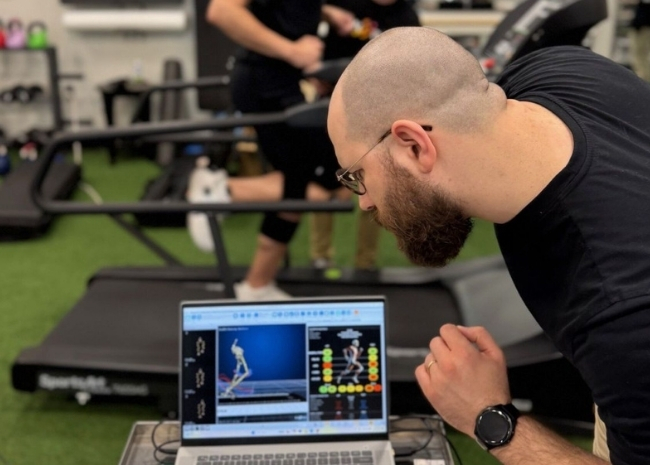
Running analysis is a structured evaluation of your running mechanics using slow‑motion video (2D), motion sensors (3D), or a combination of both.
It helps you see:
- How your foot strikes
- How your hips, knees, and trunk move
- Where you’re losing efficiency
- What areas of your body are absorbing too much stress
This isn’t about “fixing” your form—it’s about discovering the most efficient version of your natural stride.
Why Running Analysis Matters
Most common running issues—knee pain, shin splints, hip discomfort, Achilles irritation—are tied to how you move. Runners often compensate without realizing it.
A running analysis helps you:
- Identify inefficient movement patterns
- Understand the root cause of injuries or soreness
- Improve efficiency without adding mileage
- Reduce impact on joints
- Run with more confidence and power
Even small adjustments can make your running feel smoother immediately.
2D vs. 3D Running Analysis (Quick Guide)
2D Running Analysis
Great for:
- General form feedback
- Recreational runners
- Quick, clear video breakdowns
You’ll see slow‑motion clips that reveal key movement patterns.
3D Running Analysis
Best for:
- Runners with recurring injuries
- Performance-focused athletes
- Those who want precise biomechanical data
You get measurable data on joint angles, impact forces, asymmetries, timing patterns, and more.
Both give you clarity. The difference is how detailed you want the information to be.

What Happens During a Running Analysis
We keep it simple and easy:
1) Movement & Strength Screening
Quick checks of hip stability, ankle mobility, and core control. These underlying factors often drive your running mechanics.
2) Camera or Sensor Setup
We capture your natural stride using high-speed video or 3D sensors.
3) You Run at Your Normal Pace
Nothing forced or unusual—just you running how you normally would.
4) Breakdown of Your Mechanics
Together, we review:
- Hip drop
- Overstriding
- Stride length and cadence
- Trunk rotation
- Asymmetries
- Impact loading
- Ground contact patterns
Seeing yourself run—even in 2D—makes the “why” behind discomfort or inefficiency much clearer.
5) Personalized Improvement Plan
This is where our expertise shines.
You get:
- Specific cues to refine your form
- Targeted exercises based on your results
- Drills to improve mechanics
- Mobility work where your body actually needs it
- Clear next steps for training
Is A Running Analysis Right For You?
A running analysis is helpful for almost any runner, especially:
- New runners wanting a strong, healthy start
- Athletes training for races
- Anyone with chronic or recurring running injuries
- Runners returning after time off
- Data-driven runners who want to understand their stride
If you run, you benefit.
Common Patterns We Fix—Every Day
Some patterns almost every runner has (but rarely notices):
- Overstriding → extra knee & hip stress
- Hip drop → side-to-side compensation
- Low cadence → longer ground contact, higher impact
- Trunk rotation → lost efficiency
- Uneven loading → one leg doing more work
Running analysis catches these and shows you exactly how to address them.
How Our Physical Therapists & Running Specialists Help After the Running Analysis
This is the part that makes the biggest difference.
Anyone can show you a video.
Our team shows you what to do with it.
Here’s how we help runners immediately after their analysis:
1) Translating Data Into Action
It’s easy to feel overwhelmed by biomechanics.
Our specialists simplify everything into:
- 2–3 key things to work on
- Clear steps for improving your mechanics
- Practical drills you can use right away
You don’t walk away guessing. You walk away knowing exactly what matters.
2) Corrective Exercises & Strength Programming
We build a plan tailored to your movement patterns. Not a generic runner’s program—your program.
This may include:
- Glute activation
- Hip stability drills
- Ankle/foot strengthening
- Core control
- Plyometric progressions
- Cadence training
- Form-focused running drills
Everything is based on your analysis.
3) Hands-On Treatment (If Needed)
If your analysis reveals pain drivers or movement limitations, our physical therapists can address:
- Joint stiffness
- Muscle imbalances
- Tendon irritation
- Soft-tissue restrictions
- Post-injury compensations
This is where the “why does this hurt?” finally gets solved.
4) Running Form Coaching & Reinforcement
Mechanics don’t change overnight.
We help you:
- Practice new cues
- Build better habits
- Reinforce efficient movement
- Layer progressions gradually
- Stay accountable
Our goal is to help the improvements stick.
5) Long-Term Guidance
Whether you’re preparing for a race or rebuilding after injury, we guide your training so you can:
- Increase mileage safely
- Improve pacing and efficiency
- Avoid future injuries
- Feel stronger and smoother with each run
We’re in it with you—not just for the assessment, but for the journey.
See What a Running Analysis Looks Like
The Bottom Line
Running analysis gives you clarity. Our physical therapists and running specialists give you a plan.
Together, they help you:
- Understand your movement
- Improve efficiency
- Prevent injury
- Run stronger and more confidently
The Jackson Clinics serves 19 locations throughout Northern Virginia.
Find one near you: thejacksonclinics.com/locations