
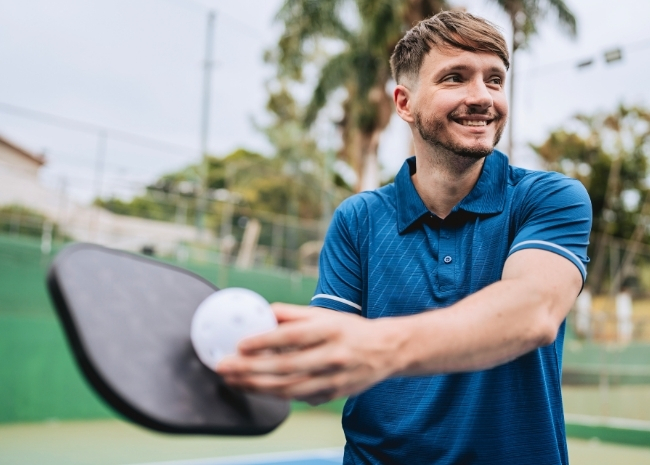
Pickleball Pain: Why It Happens & Injury Prevention Tips
Pickleball has quickly become one of the most popular ways to stay active, especially during the summer months here in Northern Virginia. It’s social, accessible, and a great cardiovascular workout. But with its rapid rise in popularity, physical therapists are also seeing an increase in elbow and shoulder pain tied directly to the sport.
If you’ve recently taken up pickleball—or increased how often you play—and are noticing discomfort in your arm, you’re not alone. The good news is that most of these issues are highly treatable and often preventable with the right approach.
Why Pickleball Can Lead to Pain
At first glance, pickleball seems low-impact compared to sports like tennis. However, it places repetitive stress on specific muscles and tendons, especially in the upper body.
Every time you swing the paddle, you’re asking your body to:
- Grip firmly
- Rotate through the shoulder
- Control speed and direction quickly
- Absorb force from ball contact
These movements happen over and over again, often in quick succession during games. When your body isn’t fully prepared—or when volume increases too quickly—this can overload tissues and lead to irritation.
Two of the most common conditions we see are:
- Tennis elbow (lateral epicondylitis)
- Shoulder impingement or rotator cuff strain
Understanding Tennis Elbow in Pickleball Players
Despite its name, tennis elbow is actually very common in pickleball players.
This condition involves irritation of the tendons on the outside of the elbow, which are responsible for stabilizing your wrist and controlling grip strength.
Common Symptoms
- Pain or tenderness on the outer elbow
- Discomfort when gripping the paddle
- Pain when lifting objects (even light ones like a coffee cup)
- Aching that worsens after playing
Why It Happens
A key factor is repetitive gripping and wrist extension during paddle swings. Many players, especially beginners, tend to:
- Grip the paddle too tightly
- Use more wrist than necessary
- Play longer sessions than their body is used to
Over time, this can lead to small amounts of tendon breakdown, resulting in pain and weakness.
Shoulder Pain: A Growing Issue Among Players
The shoulder is another area commonly affected, particularly with overhead shots, smashes, and quick reaction swings.
Common Symptoms
- Dull or sharp pain in the front or side of the shoulder
- Tightness or reduced range of motion
- Pain when reaching overhead or across the body
- Weakness or fatigue during games
What’s Going On
Most shoulder pain in pickleball players comes from some combination of:
- Rotator cuff overload (these muscles stabilize your shoulder joint)
- Poor mechanics or posture during play
- Limited mobility in the upper back, forcing the shoulder to compensate
If the shoulder isn’t moving efficiently, it becomes easier to irritate the surrounding structures.
Key Risk Factors to Be Aware Of
Certain patterns significantly increase your likelihood of developing pain:
- Doing Too Much, Too Soon
Jumping from minimal activity to playing several times per week—or multiple games in one session—is one of the biggest triggers. - Poor Technique
Small inefficiencies in swing mechanics can place extra stress on joints and tendons. - Equipment Factors
Grip size, paddle weight, and even string tension (for those crossing over from other sports) can influence strain. - Lack of Strength or Mobility
Weak shoulder stabilizers or tight forearm muscles increase the load on vulnerable areas. - Skipping Warm-Up
Going straight into play without preparing your muscles reduces their ability to handle stress.
What You Can Do Right Now to Reduce Pain
If you’re starting to feel discomfort, there are several simple but effective steps you can take.
1) Loosen Your Grip:
Many players instinctively grip the paddle too tightly. Try to maintain a firm but relaxed hold—this reduces strain on your forearm and elbow.
2) Modify Volume
Instead of playing multiple long matches in a row:
- Take breaks between games
- Limit total play time initially
- Gradually increase your activity level
A helpful guideline is to increase play time by no more than about 10–20% per week.
3) Add Basic Strengthening
Targeted exercises can make a significant difference:
- Light wrist strengthening for the forearm
- Rotator cuff exercises for shoulder stability
- Scapular (upper back) strengthening for posture and control
These don’t require heavy weights—consistency matters more than intensity.
4) Improve Mobility
Tightness in the forearms, shoulders, or upper back can change how force is distributed in your body.
Focus on:
- Gentle forearm stretching
- Shoulder mobility exercises
- Thoracic (upper back) rotation work
Even 5–10 minutes a few times per week can help.
5) Respect Early Warning Signs
Pain is not something to push through. Early symptoms are your body’s way of signaling overload.
If you notice:
- Pain that lingers after playing
- Increasing discomfort with each session
- Weakness or reduced performance
It’s time to scale back and address the issue before it progresses.
When to Seek Help
While mild soreness can be normal, persistent or worsening pain shouldn’t be ignored.
Consider seeing a physical therapist if:
- Pain lasts more than a week or two
- It interferes with daily activities
- You notice weakness, loss of motion, or sharp pain
A PT can identify the underlying cause—whether it’s strength, mobility, technique, or workload—and create a targeted plan to get you back to playing comfortably.
The Bottom Line
Pickleball is a fantastic way to stay active, but like any sport, it places specific demands on your body. Elbow and shoulder pain usually aren’t random—they’re the result of repetition, mechanics, and load exceeding what your body is prepared for.
The encouraging news is that with a few proactive changes—adjusting your grip, pacing your play, and building strength—you can continue to enjoy the game without pain.
If something doesn’t feel right, addressing it early is the fastest way to stay on the court and keep doing what you enjoy.
The Jackson Clinics serves 19 locations throughout Northern Virginia.
Find one near you: thejacksonclinics.com/locations