
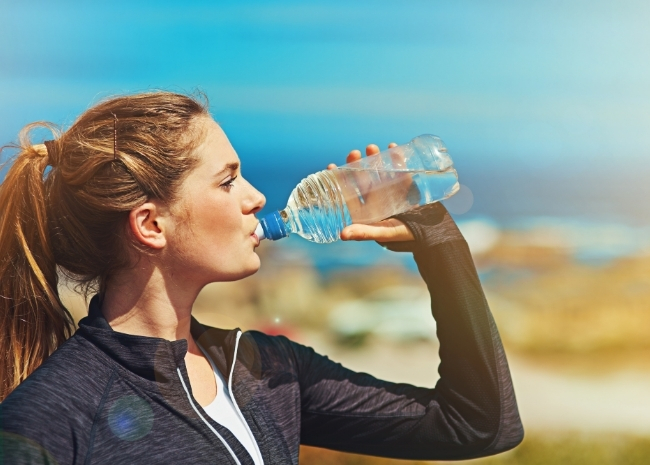
The Role of Hydration in Muscle Performance and Injury Prevention
If you’re running, lifting, playing sports, or training outdoors this summer, hydration isn’t just a general health habit—it’s a key performance factor.
Athletes often focus on strength, endurance, and recovery, but hydration directly influences how your muscles contract, generate power, and resist injury. Even mild dehydration can quietly reduce performance and increase your risk of injury.
Why Hydration Matters for Active Muscles
Muscle tissue is made up of roughly 70–75% water, making fluid balance essential for:
- Muscle contraction and relaxation
- Nutrient delivery (oxygen, glucose, electrolytes)
- Waste removal (like lactic acid buildup)
- Temperature control during training
In summer conditions, hydration becomes even more important because:
- Sweat rates increase significantly
- Electrolyte loss is higher
- Core temperature rises faster
- Recovery demands increase
When hydration is optimized, your muscles perform efficiently, recover more quickly, and sustain activity longer. When it drops—even slightly—these systems begin to break down.
Hydrated vs. Dehydrated Muscles
A simple way to understand the impact:
✅ Hydrated Muscles
- Contract smoothly and efficiently
- Maintain strength and endurance
- Recover faster between efforts
- Stay elastic and resilient
- Support coordinated, controlled movement
❌ Dehydrated Muscles
- Fatigue more quickly
- Feel tight and less responsive
- Lose elasticity (higher strain risk)
- Produce less power
- Have slower reaction time and coordination
For athletes, this shows up as:
- Slower sprint times
- Reduced lifting capacity
- Earlier fatigue during activity
- Increased compensation patterns
What Happens When Your Muscles Are Dehydrated
Even small drops in hydration can affect how your body feels and performs. Losing just a small amount of fluid can make your muscles work harder and fatigue faster.
1. Your Muscles Don’t Perform as Efficiently
Your muscles rely on proper fluid balance to function well.
When you’re dehydrated:
- Movements feel less controlled
- Power output drops
- Fatigue sets in earlier
2. Your Muscles Become More Injury-Prone
Well-hydrated muscles are flexible and better able to absorb force.
When dehydrated:
- Muscles become tighter
- They tolerate stress less effectively
- The risk of strains and pulls increases
This is especially important during activities like running, jumping, or quick directional changes.
3. You Fatigue Faster
Dehydration makes it harder for your body to deliver energy to your muscles.
As a result:
- Workouts feel harder than usual
- You tire out sooner
- Movement quality begins to break down
Fatigue often leads to compensations—which is where injuries occur.
4. Your Coordination Declines
Hydration also affects how your brain and muscles communicate.
When you’re dehydrated:
- Reaction time slows
- Movements become less precise
- You’re more likely to misstep or move awkwardly
5. You’re More Likely to Cramp
Dehydration disrupts fluid and electrolyte balance, which can lead to:
- Uncontrolled muscle tightening
- Cramping during or after activity
Cramps are often a sign your muscles are fatigued and under-hydrated.
How to Tell if Your Muscles Are Dehydrated
Many athletes miss early warning signs because they rely on thirst alone.
Early Signs
- Muscles feel tight or slow to warm up
- Reduced explosiveness
- Workouts feel harder than expected
Mid-Level Signs
- Faster fatigue
- Decreased endurance
- Mild cramping or twitching
- Loss of coordination
Later Signs
- Persistent soreness or tightness
- Noticeable performance drop
- Cramping during or after activity
- Heavier, slower movement
Quick Self-Checks
- Urine color: Pale = hydrated; dark = dehydrated
- Sweat loss: Heavy sweating without replacement = dehydration
- Recovery: Excess soreness after normal workouts
Hydration and Injury Risk
For active individuals, dehydration significantly increases injury risk.
When hydration is low:
- Muscles absorb force less effectively
- Fatigue alters movement patterns
- Joint stress increases
- Reaction time decreases
This is especially important in:
- Pickleball and tennis (quick direction changes)
- Running (repetitive loading)
- Strength training (high force)
- Group fitness in heat
Practical Hydration Strategies
Before Training: Start Hydrated (Not Catching Up)
Hydration starts hours before activity, not right when you begin.
- Drink consistently throughout the day leading up to training—not all at once
- If you’re training early, drink water first thing in the morning
- For longer or intense sessions, consider adding electrolytes ahead of time
💡 Why this matters: Once you’re already dehydrated, it’s very difficult to fully recover hydration status mid-workout.
During Training: Match Your Fluid Loss
The goal isn’t just to drink—it’s to keep up with what you’re losing through sweat.
- Take small, frequent sips every 10–20 minutes instead of large amounts at once
- Increase intake based on:
- Heat and humidity
- Workout intensity
- Sweat rate (some people lose far more than others)
- For sessions longer than 60–90 minutes, add electrolytes to help maintain fluid balance and muscle function
💡 Performance tip: If you wait until you feel thirsty, you’re already behind.
After Training: Rehydrate With Purpose
Post-workout hydration is about recovery, not just replacement.
- Replace the fluids you lost (especially if you had heavy sweat)
- Include electrolytes (especially sodium) to help retain fluid
- Pair fluids with a meal or snack that includes protein, carbohydrates, and some sodium to improve hydration and support muscle recovery.
💡 Why this matters: Rehydrating properly helps restore muscle function, reduce soreness, and prepare you for your next session.
Adjust for Summer Conditions
In the heat, your hydration baseline changes:
- You may need significantly more fluid than usual—even for the same workout
- Back-to-back training days require more aggressive rehydration
- Long outdoor days (not just workouts) count toward fluid loss
💡 Even light activity in the heat can create a hydration deficit.
When Hydration Isn’t the Only Issue
If you’re staying hydrated but still experiencing:
- Recurring strains
- Frequent cramping
- Persistent fatigue
- Declining performance
Other factors may be involved, such as:
- Strength imbalances
- Poor mechanics
- Mobility limitations
- Overtraining
The Bottom Line
For athletes and active individuals, hydration is both a performance driver and injury prevention tool.
When your muscles are hydrated, they’re stronger, more efficient, and more resilient. When they’re not, performance declines and injury risk rises.
As summer heat and activity levels increase, staying hydrated helps ensure your body can perform, recover, and stay injury-free.
The Jackson Clinics serves 19 locations throughout Northern Virginia.
Find one near you: thejacksonclinics.com/locations