
How 3D Running and Walking Analysis Can Help You Measure and Treat Foot and Ankle Problems
A New Way to Look at Movement
As physical therapists, we’re trained to spot when someone’s movement doesn’t look quite right — a limp, a rolling foot, or a restricted ankle. But even with years of experience, the human eye can only see so much.
That’s why 3D running and walking analysis is becoming such a valuable tool. It provides a detailed look at how the body moves in three dimensions, helping us identify and treat foot and ankle problems with greater accuracy.
For patients struggling with pain, instability, or repetitive injuries, 3D gait analysis gives us the data we need to target the root cause.
What Is 3D Running and Walking Analysis?
How It Works
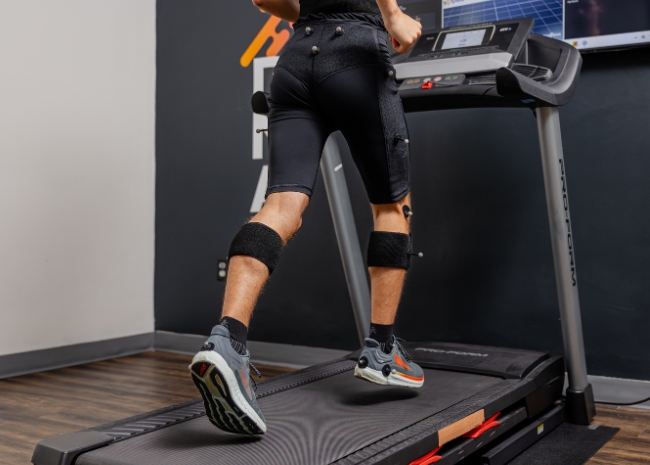
In a 3D gait analysis, small reflective markers or wireless sensors are placed on the patient’s legs and feet. As they walk or run, specialized cameras capture their motion from multiple angles.
The data are then used to create a three-dimensional model that shows exactly how each joint — especially the foot and ankle — moves through space. The system measures stride length, ground contact time, joint angles, and the forces acting on the body at every stage of movement.
Why It’s Different
Traditional 2D video can only show movement from one viewpoint, such as from the side or behind. In contrast, 3D walking and running analysis captures motion in every direction. This allows physical therapists to see rotation, pronation, or asymmetries that might be hidden in a standard exam.
It’s like moving from a flat photo to a 3D scan — the extra dimension reveals what’s really happening beneath the surface.
Why It Matters for Foot and Ankle Symptoms
Getting Precise Measurements
Foot and ankle pain often develops gradually, and the cause isn’t always where the pain is felt. Limited ankle motion, poor load distribution, or even hip weakness can all contribute.
3D gait analysis gives therapists a clear, measurable picture of how the entire lower body works together.
For example:
- We can quantify pronation (foot rolling inward) in degrees, not just estimate it by sight.
- We can measure ankle dorsiflexion and track how it changes throughout the gait cycle.
- We can see exactly when the heel lifts and how that affects push-off mechanics.
These insights help therapists design more effective treatment plans for foot and ankle rehabilitation.
Spotting Asymmetries and Compensation
After an injury like an ankle sprain or surgery, it’s common for patients to unconsciously shift weight off the affected side. 3D walking analysis can identify even small differences in load or timing between legs.
It also shows compensations higher up the chain — like a rotated pelvis or overactive hip — that may be keeping the foot and ankle from moving naturally. Correcting these subtle imbalances can prevent re-injury and improve long-term outcomes.
How 3D Analysis Supports Treatment and Recovery
Creating a Clear Starting Point
Every rehab program starts with an assessment. A 3D gait analysis gives you an accurate baseline that goes far beyond observation alone. Instead of guessing how movement is improving, you can show real data — such as increased ankle mobility, more even step timing, or improved push-off power.
This is especially helpful when treating:
- Ankle sprains and instability
- Plantar fasciitis and heel pain
- Achilles tendinopathy
- Post-surgical foot and ankle conditions
- Running-related injuries
Tracking Real Progress Over Time
Re-testing allows therapists to compare results side-by-side. Maybe the patient’s dorsiflexion increased by 5°, or their pronation velocity decreased. These measurable changes confirm progress and help adjust exercise intensity and goals with confidence.
Fine-Tuning Footwear and Orthotics
Choosing the right shoes or orthotics is a key part of treating foot and ankle pain. 3D analysis makes this process data-driven.
By measuring how different footwear options affect pressure, angles, and loading patterns, therapists can find the best match for each patient.
For example:
- See if custom orthotics reduce forefoot pressure.
- Measure how minimalist vs. cushioned shoes change ground reaction forces.
- Test whether rocker-bottom soles reduce strain on the Achilles tendon.
With objective results, footwear and orthotic recommendations become more precise and personalized.
Supporting Neuromuscular Retraining
Some 3D gait systems include real-time feedback, which can help patients correct their movement patterns on the spot.
Visual or auditory cues make it easier for patients to understand — and feel — what efficient movement looks like.
This can accelerate motor learning during:
- Gait retraining after ankle injury
- Balance and coordination exercises
- Running technique adjustments
Using 3D walking and running analysis as part of neuromuscular retraining helps restore natural movement patterns faster and more effectively.
Bringing 3D Gait Analysis Into Your Clinic
Easier and More Accessible Than Ever
3D motion systems used to be limited to research labs, but modern versions are portable, affordable, and easy to use in clinical settings. Today’s systems often use lightweight sensors instead of large camera arrays — making them ideal for physical therapy clinics of all sizes.
They’re especially valuable for:
- Runners and active adults
- Post-operative patients
- Chronic foot and ankle pain cases
- Geriatric or balance-impaired populations
Tips for Integrating 3D Analysis
- Learn to interpret the key data points (angles, timing, forces).
- Keep testing consistent for accurate comparisons.
- Use 3D visuals to educate patients — seeing their own movement often increases engagement and compliance.
3D Gait Analysis at The Jackson Clinics
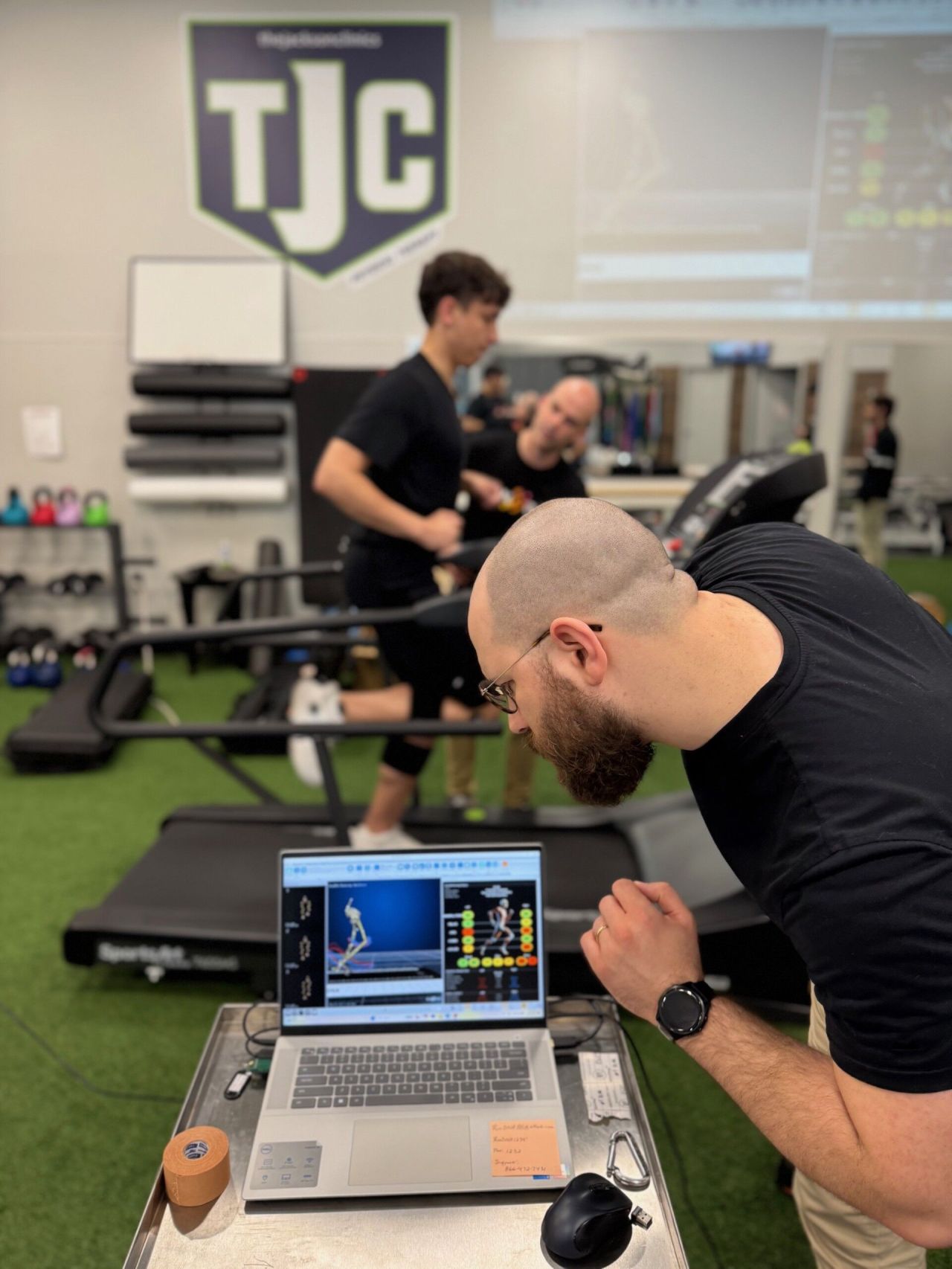
At The Jackson Clinics, we use advanced 3D running and walking analysis to assess movement and treat a wide range of foot and ankle conditions. Our therapists combine evidence-based care with state-of-the-art technology to help patients move pain-free and perform at their best.
Contact us today to learn more about how our team uses 3D gait analysis to improve outcomes in rehabilitation, injury prevention, and performance enhancement.
The Future of Foot and Ankle Care
3D running and walking analysis is changing the way physical therapists assess and treat movement.
It offers a detailed look at mechanics we could once only guess at, providing:
- Objective data for better decision-making
- Clear tracking of progress over time
- Personalized care for every foot and ankle condition
By combining your clinical expertise with advanced motion analysis, you can help patients move better, recover faster, and prevent future injuries.
—-
Did you find these tips helpful? Let us know! Contact our PT Success Team at ptlighthouse@thejacksonclinics.com
To learn more about The Jackson Clinics and to explore a career with us, please visit thejacksonclinics.com/careers