What is Ultrasound Guided Dry Needling?
If you’ve been struggling with stubborn tendon pain, a lingering sprain, or an overuse injury that just won’t heal, you may benefit from ultrasound-guided dry needling.
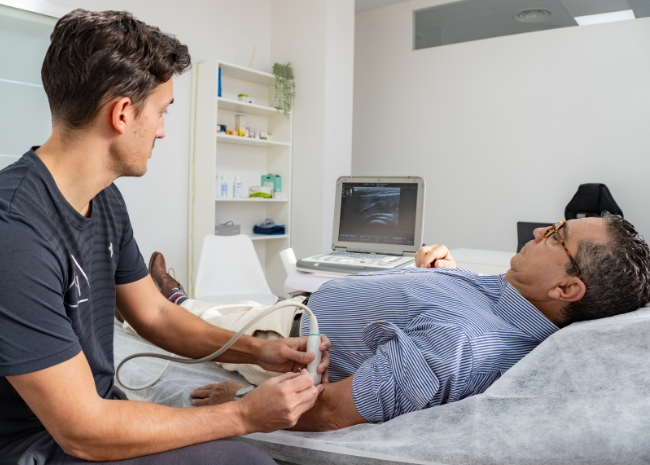
This technique uses a very thin needle and real-time ultrasound imaging to treat specific tissues—such as tendons, ligaments, and scar tissue—that are often difficult to reach with traditional hands-on methods alone.
Instead of guessing, your clinician can actually see the tissue on the screen, making treatment more precise, safe, and effective.
How Ultrasound Guided Dry Needling Feels
Most people describe the sensation as brief and very tolerable.
You may notice:
- A small pinch as the needle enters
- A deep pressure or ache when it reaches the target tissue
- Mild soreness for a day or two afterward
Because every needle placement is guided by ultrasound, the clinician can avoid sensitive areas and treat the exact spot that needs attention. Many patients feel more comfortable and confident knowing the process is highly controlled.
Why Clinicians Use Ultrasound Guidance
Ultrasound imaging allows the provider to look directly at the tendon or ligament causing pain.
It shows:
- Areas of tendon degeneration
- Thickening or irritation in ligaments
- Scar tissue or adhesions
- Poor blood flow or inflammation
Once the problem area is identified, the clinician can treat it with exceptional precision.
How It Helps: Evidence-Based Benefits
Ultrasound-guided dry needling is especially effective for chronic tendon and ligament problems that have stopped healing on their own.
1) Helps Tendons Heal (Fenestration Technique)
When tendons become irritated or worn down—like in rotator cuff or Achilles issues—they often struggle to heal naturally.
A technique called tendon fenestration involves making a series of tiny, controlled needle passes in the injured area to:
- Break up unhealthy or disorganized tissue
- Increase blood flow
- Stimulate the cells responsible for tendon repair
- Restart a stalled healing process
This can reduce pain and improve the tendon’s ability to handle load again.
2) Breaks Up Scar Tissue and Adhesions
Scar tissue can limit movement and cause ongoing pain. Ultrasound-guided dry needling can help soften or break up these thickened areas, allowing tissues to glide and function more normally.
3) Helps Ligaments Recover From Old Sprains
Chronic ankle, elbow, or shoulder sprains often involve small ligament fibers that never fully healed.
Guided needling can:
- Stimulate fresh collagen production
- Improve tissue strength
- Support stability in the injured area
4) Safely Treats Deep or Hard-to-Reach Areas
Some areas of the body—like deep hip tendons or certain parts of the shoulder—are difficult to access by touch alone. Ultrasound ensures the needle reaches the right spot while avoiding nerves and blood vessels.
How It Differs from Regular Dry Needling
Traditional dry needling mainly targets muscles based on touch and anatomical landmarks.
Ultrasound-guided dry needling is different because it focuses on treating the actual injured tissue you can see on the screen, whether that’s muscle, a tendon, ligament, or area of scar tissue.
This means:
- More accuracy
- More consistent results
- Better outcomes for chronic, stubborn injuries
- Increased safety
What to Expect During a Session
If you’re curious about trying this treatment, here’s what a typical session looks like:
- Initial Assessment: Your clinician examines your symptoms, movement, and ultrasound images to determine what’s causing the problem.
- Ultrasound Imaging: A small probe shows your tendon or ligament in real time. You’ll often be able to see the injury on the screen.
- Needle Placement: A thin needle is guided directly into the problem area. The clinician may make a few gentle passes (fenestration) to stimulate healing.
- Post-Treatment Sensations: You may feel mild soreness for 24–48 hours, improved movement, and gradual pain relief. A light exercise or loading program is usually recommended afterward to help the tissue remodel properly.
Who Benefits Most from Ultrasound Guided Dry Needling:
People dealing with:
- Rotator cuff tendinopathy
- Gluteal or hip tendinopathy
- Achilles or patellar tendon pain
- Tennis elbow
- Chronic ankle or shoulder sprains
- Post-surgical stiffness or scar tissue
- Deep or difficult-to-reach injuries
- Pain not improving with traditional PT alone
Is It Right for You?
Ultrasound-guided dry needling offers a modern, precise way to help stubborn injuries heal—especially those involving tendons and ligaments.
Compared to traditional dry needling, it provides greater accuracy, safety, and confidence, especially for deeper or more complex areas of the body.
For many people, it provides relief when other treatments haven’t worked.
Quick Takeaways:
Ultrasound-guided dry needling:
- Uses real-time imaging for precise, safe treatment
- Effective for tendons, muscles, ligaments, and scar tissue
- Fenestration technique helps restart the healing process
- Sessions are well-tolerated with mild, temporary soreness
- Works best when paired with a structured rehab plan
This treatment is a patient-focused, results-oriented approach to muscle pain, offering tangible relief for those who need it most.
Ultrasound Guided Dry Needling is currently available at The Jackson Clinics – Shirlington clinic.
Call our Shirlington clinic at 703.933.0038 to get started today.
The Jackson Clinics serves 18 locations throughout Northern Virginia.
Find one near you: thejacksonclinics.com/locations